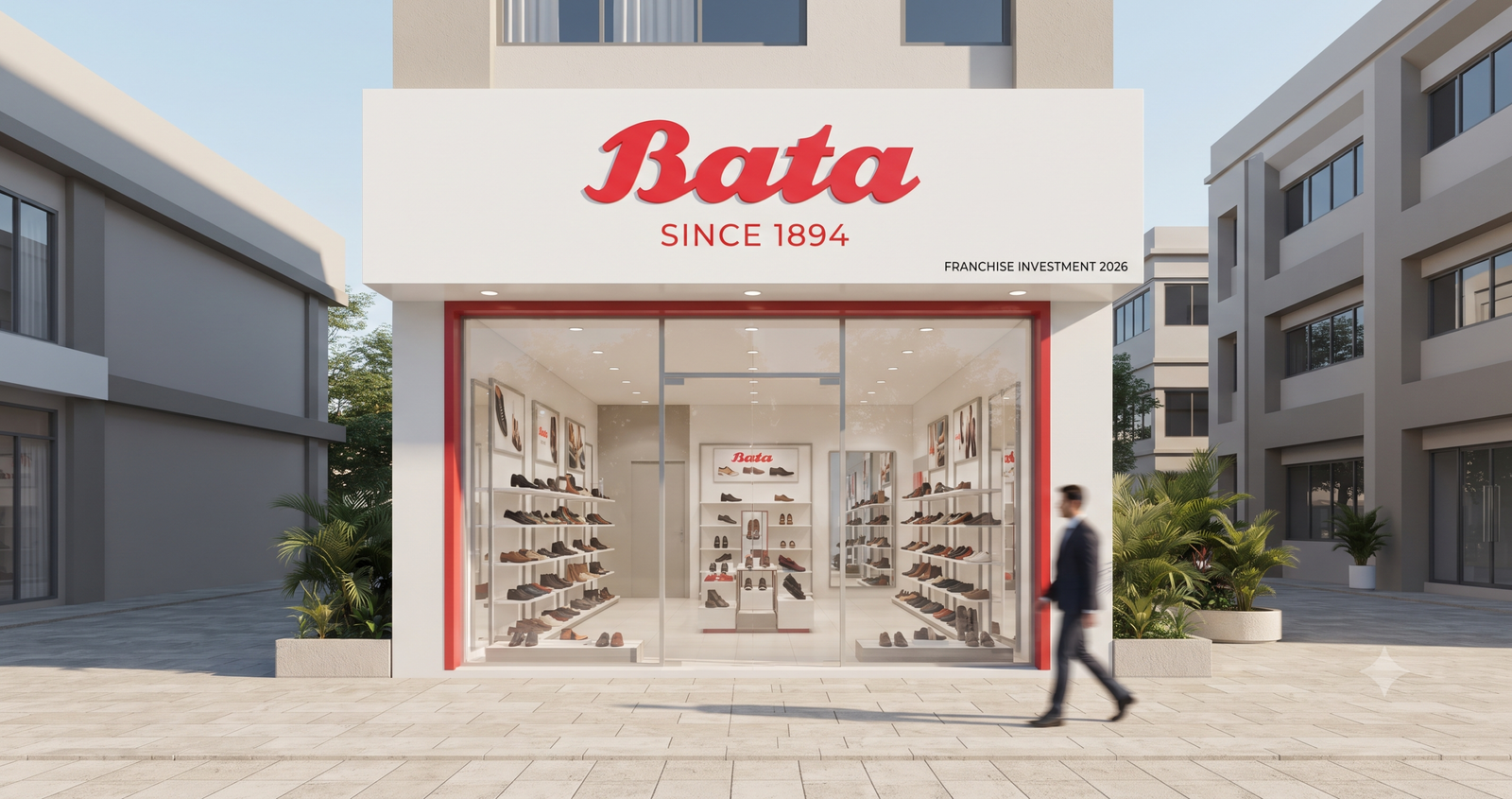
Why the Bata Franchise is a Legacy Investment in 2026
For decades, Bata has been a household name in India, synonymous with durable, affordable, and high-quality footwear. With an immense manufacturing capability and thousands of retail stores, Bata dominates the Indian footwear market across all age groups.
For an entrepreneur, securing a Bata franchise means partnering with a brand that enjoys generational trust. Because footwear is a necessity, Bata stores guarantee consistent daily footfall, making it one of the most reliable retail investments available.
Market Insight: The Indian footwear market is shifting rapidly from unorganized local shops to organized retail. Bata is heavily expanding into Tier-2 and Tier-3 cities, offering lucrative opportunities for local investors.
Comparing other retail franchises? Read our guide on the Raymond Franchise Cost and Lenskart Franchise Cost.
Bata Franchise Cost & Setup Investment 2026
Bata generally offers a Franchise Owned Franchise Operated (FOFO) model, though they also have variations depending on the location size. Here is the estimated investment to set up a standard Bata retail store:
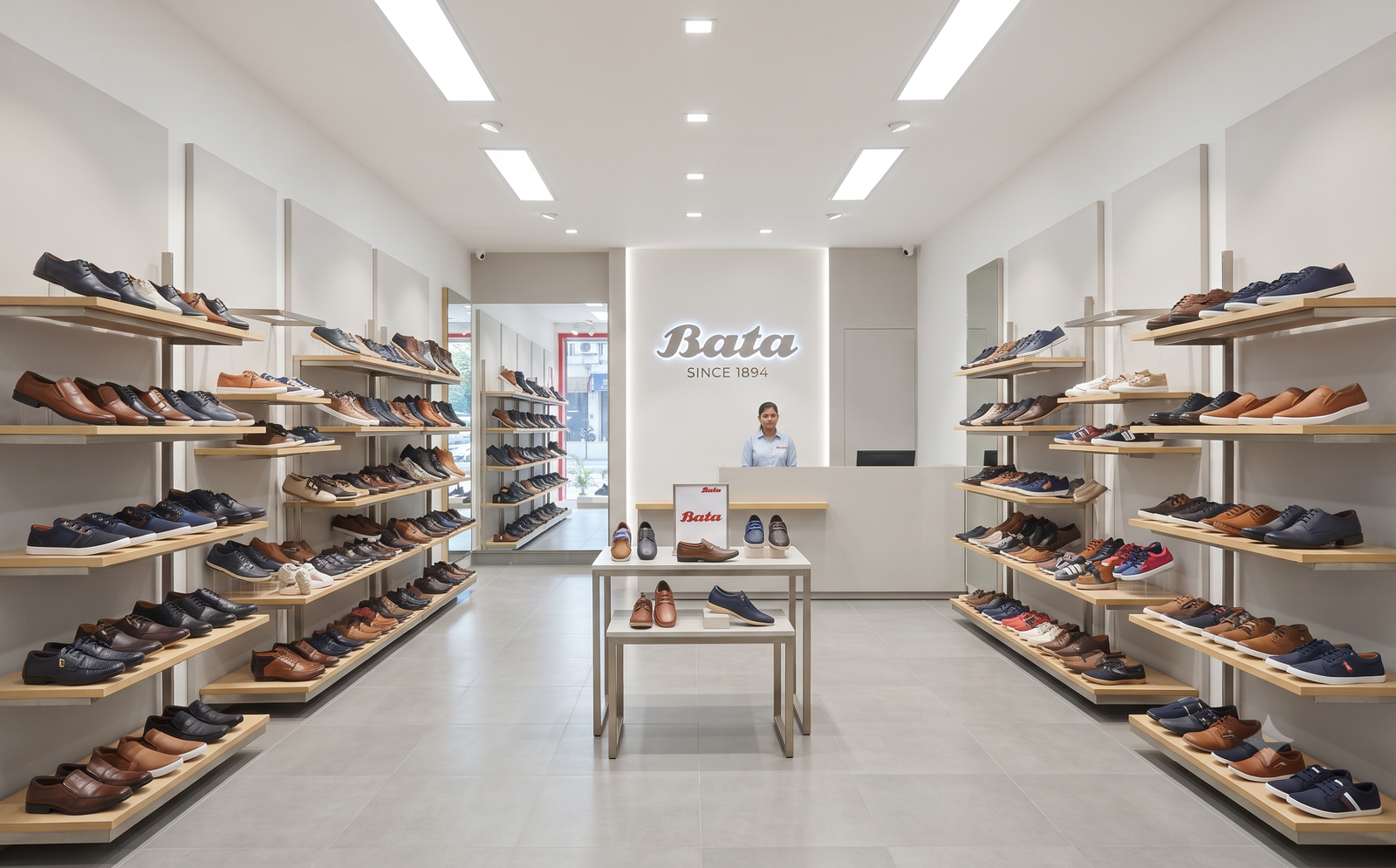
A modern Bata store features a clean, well-lit interior designed to showcase a massive variety of SKUs efficiently.
Profit Margin & Return on Investment (ROI)
Footwear retail operates on excellent gross margins, though proper inventory management is crucial to avoid dead stock.
How to Apply for a Bata Franchise
- Official Contact: Visit the official Bata India corporate website (bata.in) and navigate to the Franchise/Partner section.
- Submit Details: Fill out the partner application form with your property dimensions and city details.
- Site Evaluation: A Bata expansion manager will visit the site to assess footfall, visibility, and local competition.
- Agreement & Setup: If approved, you will sign the franchise agreement. Bata’s design team will execute the standardized store interiors.
- Stock Loading & Launch: The company will provide the initial inventory mix based on local demographics, followed by a grand opening.
Pros & Cons of a Bata Franchise
| Advantages | Challenges |
|---|---|
| Generational brand trust in India | Requires a large adequate commercial space prime location |
| Excellent margins (attractive margins) | Managing hundreds of sizes and SKUs is complex |
| Recession-proof (Footwear is a necessity) | High initial inventory cost (a competitive investment) |
| Strong corporate supply chain support | Dead stock (unsold sizes) can impact profitability |
Verdict: Bata is a fantastic investment for individuals who own prime retail space or have the capital to lease one. The brand’s mass appeal ensures that you will almost always have a steady stream of customers.
Need expert advice on selecting a retail franchise? Contact FranchiseOptions.in or call us at +91 8889900074 for professional consulting.
Frequently Asked Questions (FAQs)
What is the minimum investment for a Bata franchise?
To set up a standard Bata retail store, you need a minimum investment of a competitive investment to a competitive investment. This covers interiors, security deposits, and the initial stock of footwear.
Is a Bata franchise profitable?
Yes, footwear is a high-margin business. Bata franchisees typically enjoy a attractive margins to attractive margins gross margin on sales, leading to strong monthly profits in good locations.
How much area is required for a Bata store?
A minimum of adequate commercial space of commercial space on the ground floor is required to accommodate the display racks and inventory storage.
Does Bata buy back unsold stock?
Inventory terms vary based on the specific franchise agreement (FOFO vs FOCO). Generally, Bata assists with stock rotation, but terms regarding dead stock should be clarified before signing.
Disclaimer: This article is for educational and informational purposes only. Franchise investment costs, profit margins, and requirements may vary over time and by location. Please confirm all details directly with the official brand or company before making any financial decisions.
💬 Are you planning to open a retail footwear store? Share your thoughts in the comments below!