The Real Impact of Commercial Rent on Franchise Profitability in 2026
When entrepreneurs calculate their potential ROI for a new franchise, they usually focus on the gross margins of the product. They calculate that selling a ₹200 coffee with a ₹50 making cost yields a ₹150 profit.
However, they often underestimate the “silent killer” of franchise profitability in India: Commercial Rent.
Whether you are opening a massive Sreeleathers showroom or a tiny Chai Sutta Bar kiosk, your monthly rental agreement will dictate your survival. In 2026, commercial real estate prices in India’s top metro cities have surged, making location strategy more critical than ever.
In this data-driven guide, we reveal the original business data behind commercial leasing, explain “The 15% Rule”, and compare Tier-1 Malls against Tier-2 High Streets.
💡 Note: Proper real estate selection is just one step. For a complete overview of starting your business, read our master guide: The Ultimate Guide to Starting a Franchise Business in India (2026).
The Golden Metric: The 15% Rule
Our proprietary analysis of over 200 Indian franchises has revealed a strict benchmark for survival: Your monthly commercial rent should never exceed 15% of your projected gross monthly sales.
What the Data Shows:
- Rent @ 10% of Sales: Highly Profitable (Ideal target for Quick Service Restaurants).
- Rent @ 15% of Sales: Healthy / Break-even timeline of 18-24 months.
- Rent @ 20% of Sales: High Risk / Barely surviving after staff and utility costs.
- Rent @ 25%+ of Sales: The “Death Zone” / Guaranteed closure within 12 months.
If a franchisor tells you that you can afford a ₹2 Lakh/month property, you must realistically be able to generate ₹13.5 Lakhs to ₹15 Lakhs in gross monthly sales just to stay out of the “Death Zone.”
Tier-1 Premium Malls vs. Tier-2 High Streets
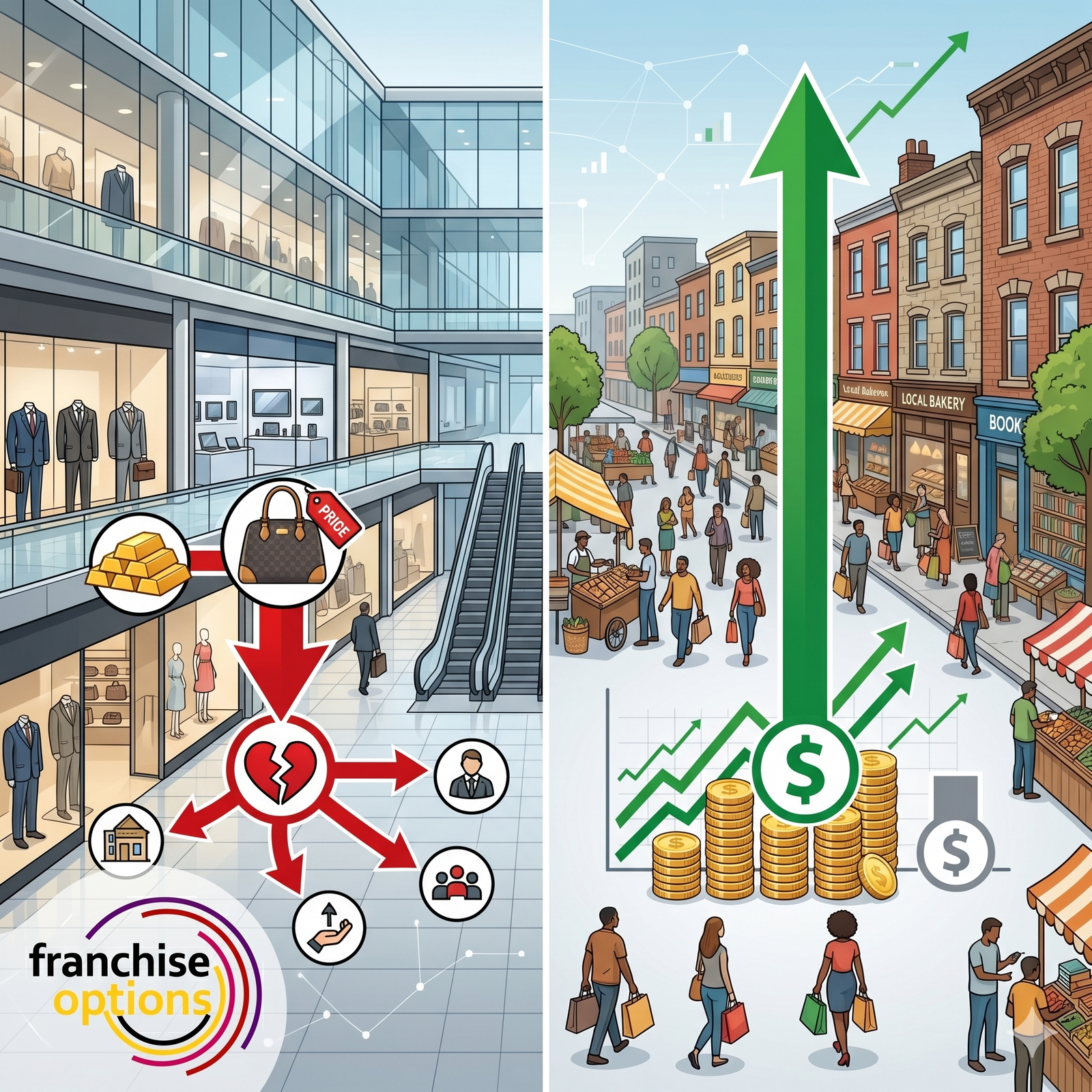
Where should you open your franchise? Let’s compare the two most popular commercial environments based on 2026 market data.
1. Tier-1 Premium Malls (Delhi NCR, Mumbai, Bengaluru)
Malls offer guaranteed, air-conditioned footfall, but the financial terms are brutal.
- Average Rent: ₹250 to ₹500 per Sq. Ft.
- Common Area Maintenance (CAM): An additional ₹40 to ₹80 per Sq. Ft. (Often overlooked by beginners!)
- The Revenue Share Trap: Many premium malls now demand a “Minimum Guarantee (MG) + Revenue Share.” This means if your business does exceptionally well, the mall takes a 10% to 15% cut of your total gross sales on top of the rent.
- Profitability Impact: Extremely tight margins. You rely entirely on massive, non-stop weekend volume.
2. Tier-2 High Streets (Indore, Lucknow, Jaipur)
Opening a store on a busy local market road in a growing city is currently the most profitable model in India.
- Average Rent: ₹80 to ₹150 per Sq. Ft.
- CAM: Zero (or negligible municipal taxes).
- Revenue Share: None. You keep 100% of your upside.
- Profitability Impact: High. Brands like Chai Kaapi and 99 Store thrive here because the low fixed costs allow them to break even within 12 months.
Case Study: F&B vs Retail Rent Impact
Different industries absorb rent differently:
| Industry Sector | Max Recommended Rent-to-Sales Ratio | Why? |
|---|---|---|
| QSR (Fast Food) | 10% – 12% | Food ingredients and chef salaries eat up 40% of revenue. Rent must stay low. |
| Premium Apparel | 15% – 18% | Brands like Allen Solly have 30%+ margins on high-ticket items, allowing them to absorb higher mall rents. |
| Supermarkets | 4% – 6% | Grocery margins are razor-thin (8-12%). They absolutely cannot survive in high-rent zones. |
Don’t Sign a Commercial Lease Blindly
Before you sign a 9-year lock-in lease agreement for your new franchise, let our experts analyze the footfall, the CAM charges, and the rent-to-sales ratio. A bad lease will kill a good franchise.
Contact FranchiseOptions.in today for a real estate & franchise consultation:
📞 +91 8889900074
✉️ info@franchiseoptions.in