The Ultimate Guide to Starting a Franchise Business in India (2026)
The Indian economy is booming, and the entrepreneurial spirit is at an all-time high. If you want to start a business with a proven track record, brand recognition, and a ready-made customer base, starting a franchise business in India is one of the smartest investments you can make in 2026.
Whether you’re looking at top-tier food chains, retail giants, or low-cost educational franchises, the opportunities are vast. But diving in without a plan can lead to costly mistakes.
This comprehensive, step-by-step guide will walk you through everything you need to know to launch a successful franchise business in India today.
Why Invest in a Franchise Business in India in 2026?
India’s consumer market is expanding rapidly, fueled by a growing middle class and increased spending power in both Tier-1 and Tier-2 cities. Franchising allows you to bypass the hardest parts of entrepreneurship: building brand trust from scratch and figuring out operational workflows.
Benefits of Franchising:
- Established Brand Identity: Customers already know and trust the brand.
- Proven Business Model: SOPs (Standard Operating Procedures) are already defined and tested.
- Training & Support: Franchisors provide extensive training for you and your staff.
- Easier Financing: Banks are more likely to approve loans for established franchise brands compared to independent startups.
7-Step Guide to Starting a Franchise Business in India
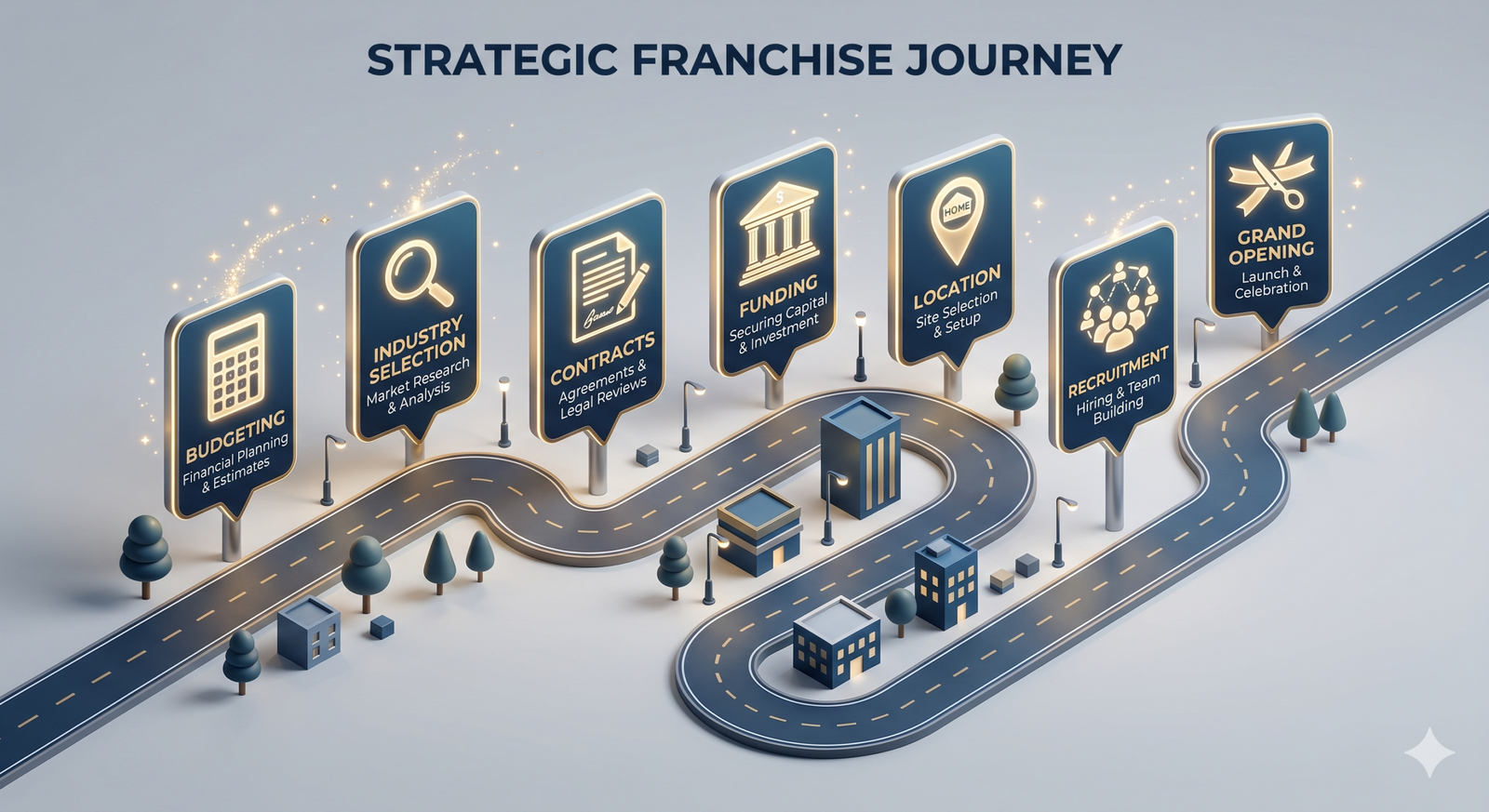
Here is your actionable, step-by-step blueprint to becoming a successful franchise owner.
Step 1: Self-Assessment and Budgeting
Before looking at brands, look at yourself. What are your interests? More importantly, what is your budget? Franchise costs in India range from ₹50,000 for low-cost setups to over ₹5 Crores for premium international brands.
- Tip: Always keep a buffer of 20-30% of your total budget for working capital during the initial 6 months.
Step 2: Choose the Right Industry
The most popular franchise sectors in India currently include:
- Food & Beverage (F&B): QSRs (Quick Service Restaurants), cafes, and bakeries.
- Retail: Supermarkets, apparel, and pharmacy chains.
- Education & EdTech: Pre-schools and coaching centers.
- Health & Wellness: Gyms, diagnostic centers, and salons.
Step 3: Shortlist and Evaluate Franchisors
Don’t just go for the biggest name; look for the best fit. Evaluate:
- Franchise Fee & Royalties: How much do they take from your monthly revenue?
- Support: Do they help with marketing, hiring, and supply chain?
- Existing Franchisees: Talk to current owners. Ask them about their actual ROI and challenges.
Step 4: Understand the Legalities (The FDD)
In India, while there is no specific “Franchise Act,” the relationship is governed by the Indian Contract Act, 1872. Carefully review the Franchise Disclosure Document (FDD) and the final Franchise Agreement.
- Key clauses to check: Renewal terms, termination clauses, territory exclusivity, and supply restrictions. Always hire a lawyer.
Step 5: Secure Financing
If you don’t have liquid capital, explore financing options. Many private and public sector banks in India offer specialized MSME loans and franchise financing schemes. The Government of India’s MUDRA Yojana is also a great resource for smaller loan amounts (up to ₹10 Lakhs).
Step 6: Location, Location, Location
Your location can make or break your franchise. The franchisor will usually have strict criteria for the commercial space (carpet area, frontage, footfall).
- Pro-Tip: Tier-2 and Tier-3 cities are currently showing higher growth rates for affordable QSRs and retail franchises due to lower real estate costs and rising aspirational demand.
Step 7: Launch and Market
Once your store is set up and your staff is trained, it’s time for the Grand Opening! While the franchisor will handle national-level marketing, you are responsible for local area marketing (LSM). Use social media, local influencers, and community events to drive initial footfall.
Comparison Table: Franchise vs. Independent Business
If you’re still on the fence about whether to buy a franchise or start your own brand from scratch, here is a quick comparison:
| Feature | Franchise Business | Independent Startup |
|---|---|---|
| Brand Recognition | High (Instant customer trust) | Low (Takes years to build) |
| Failure Rate | Historically Low | High in the first 3 years |
| Operational Freedom | Strict rules and SOPs | Complete creative control |
| Initial Costs | Usually higher (Franchise fee, setup) | Variable (Can start very lean) |
| Support System | Continuous franchisor support | You are on your own |
| Marketing | National campaigns provided | Must fund and create yourself |
🔗 Franchise Hub: Explore Top Franchise Opportunities in India
Ready to explore specific brands? Use our comprehensive guides below to find the perfect franchise for your budget and goals.
🍔 Top Food & Beverage Franchises
- Domino’s Franchise Cost in India (2026): Requirements & Profit Margin
- Pizza Hut Franchise in India: Is it a Safe Investment Today?
- 7th Heaven Bakery Franchise: Setup Cost & Honest Review
- Chai Kaapi Franchise Cost: Should You Invest in Tier-2 Cities?
💰 Investment & Cost Guides
- The Complete Franchise Cost Calculator: Hidden Fees You Didn’t Know About
- India Mein Sabse Sasti aur Profitable Franchise Kaun Si Hai?
(Bookmark this page! We update these links regularly as we review new franchise opportunities in 2026.)
📝 Frequently Asked Questions (FAQ)
Q1: How much money do I need to start a franchise in India?
A: The investment required varies widely. Low-cost franchises (like small food kiosks or education centers) can start from ₹2 Lakhs to ₹5 Lakhs. Premium international brands (like top-tier QSRs or large retail outlets) can require anywhere from ₹50 Lakhs to over ₹5 Crores.
Q2: Is franchising profitable in India?
A: Yes, franchising has a high success rate compared to independent startups because of proven business models and brand recognition. However, profitability depends heavily on the location, operational efficiency, and the specific royalty fees of the brand.
Q3: Do I need a specific license to open a franchise in India?
A: Yes. While there is no specific “Franchise License,” standard business licenses are required. These typically include GST registration, a Shop and Establishment Act license, and an FSSAI license (if it’s a food franchise).
Q4: Can I run a franchise passively?
A: Most franchisors in India prefer active owner-operators to ensure quality and brand standards are maintained. However, some larger retail or master franchise models allow for passive or absentee ownership if a strong management team is in place.
Need Expert Advice?
Finding the right franchise business in India can be overwhelming. Let our experts guide you!
Contact FranchiseOptions.in today:
📞 +91 8889900074
✉️ info@franchiseoptions.in
Disclaimer: Franchise costs and policies are subject to change by the respective companies. Always conduct thorough due diligence before signing any legal agreements.